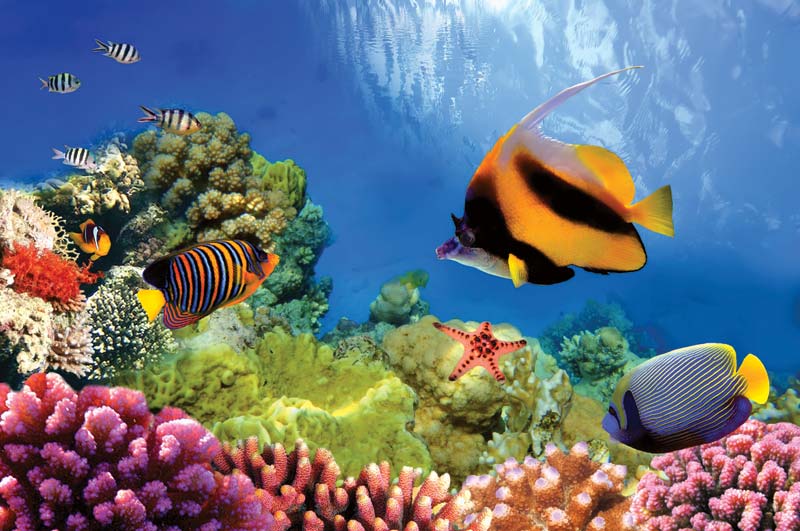
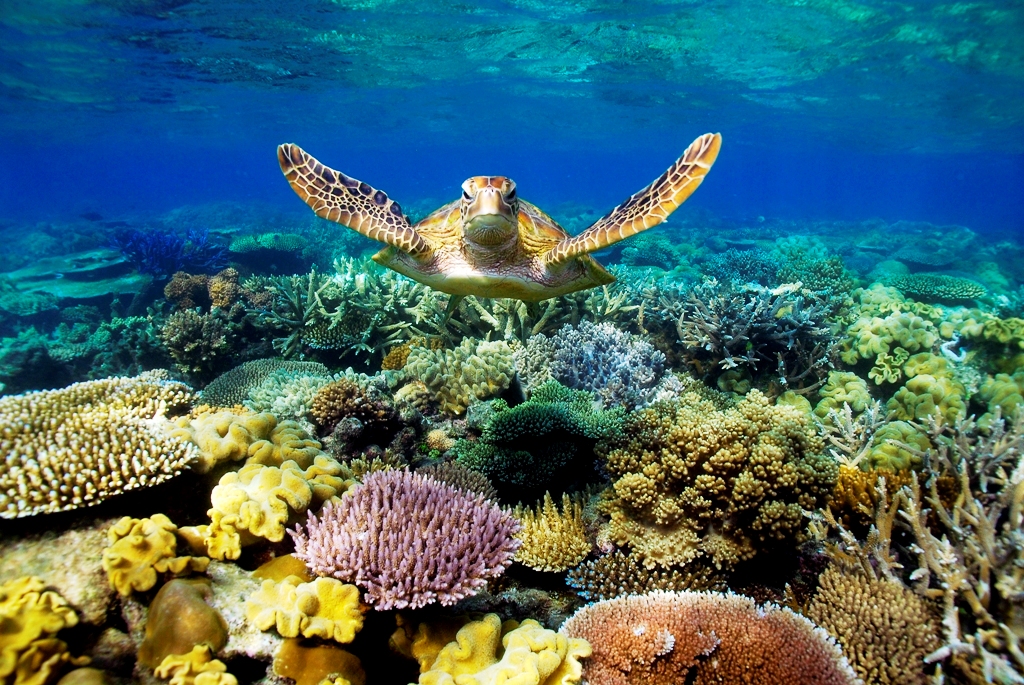
One of the 7 natural wonders of the world, the Great Barrier Reef is located off the coast of Australia’s Queensland and is home to a vast array of marine life.
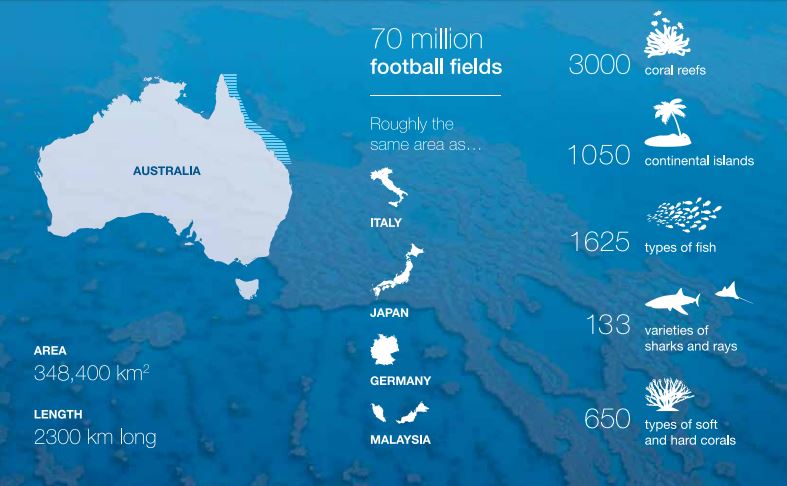
The Great Barrier Reef, which extends for over 2,300 kilometers (1429 miles) along the northeastern coast of Australia, is home to over 9,000 known species.
The Great Barrier Reef consists of about 3,000 individual reefs of coral, and the biodiversity they contain is remarkable. There are animals you would probably recognize, such as dolphins, turtles, crocodiles, and sharks. There are also venomous sea snakes, brightly colored worms, and large algae. These species interact to form a complex and delicate ecosystem dependent on the coral reef for survival
The Great Barrier Reef in Danger!!
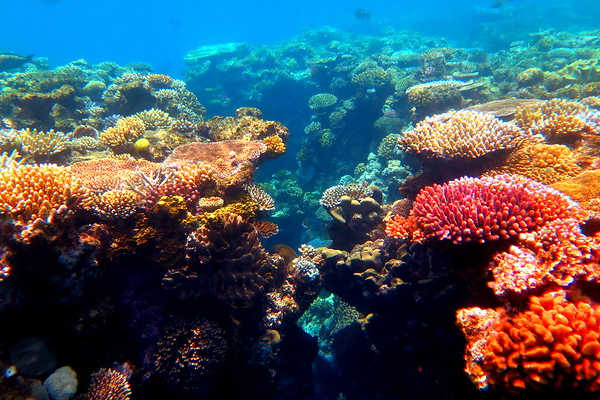
The coral and algae have evolved together to survive within a particular temperature range. As sea temperatures rise due to climate change, the algae begin to produce products toxic to the coral, which in turn expel the algae. This process is called bleaching because the coral becomes white. A 2018 study showed that about one-third of the Great Barrier Reef had experienced substantial damage from bleaching. The researchers also found that large amounts of coral had died in the warming water almost immediately—even before there was time to expel their algal partners. Climate change is not the only threat to the reef. Chemical runoff and other forms of pollution, coastal development, and overfishing all can harm coral and reduce biodiversity.
Facts about the great barrier reef
1. It is the world’s largest reef system
2. It is home to an incredible diversity of species. •30 species of whale, dolphin, and porpoise
•6 species of turtle
•17 species of sea snake
•More than 1,500 species of fish – incredibly, 10% of the world’s fish species inhabit the Great Barrier Reef.
 DuckDesk