The biggest shark in the world
The earliest megalodon fossils (Otodus megalodon, previously known as Carcharodon or Carcharocles megalodon) date to 20 million years ago. For the next 13 million years the
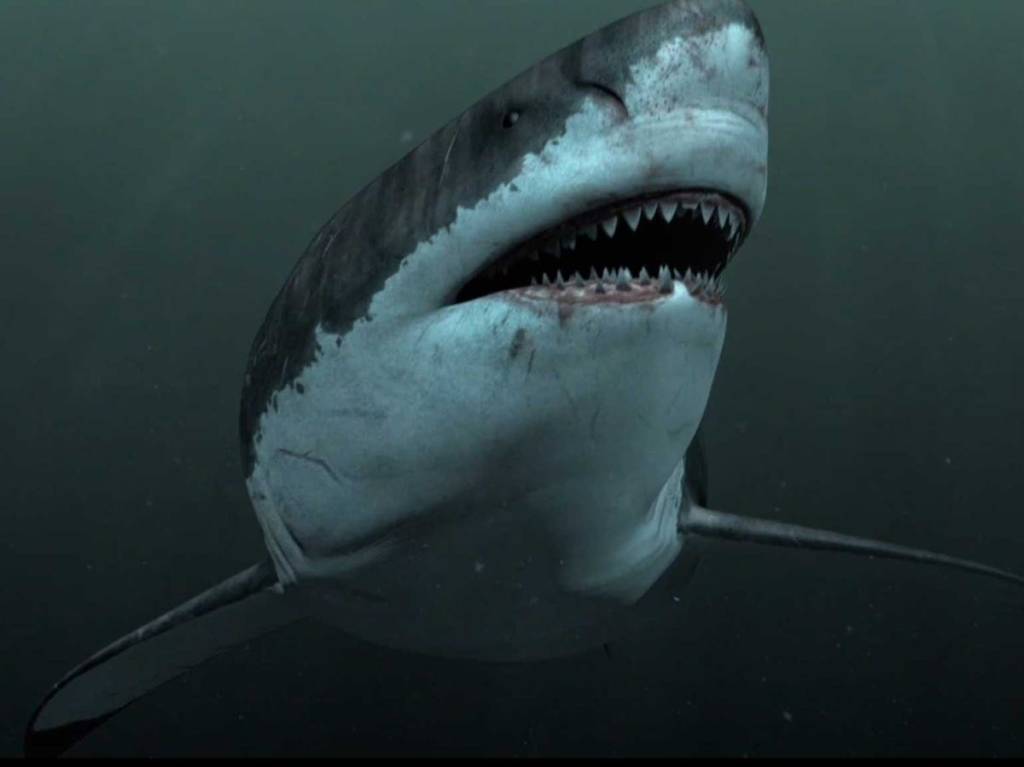
enormous shark dominated the oceans until becoming extinct just 3.6 million years ago.
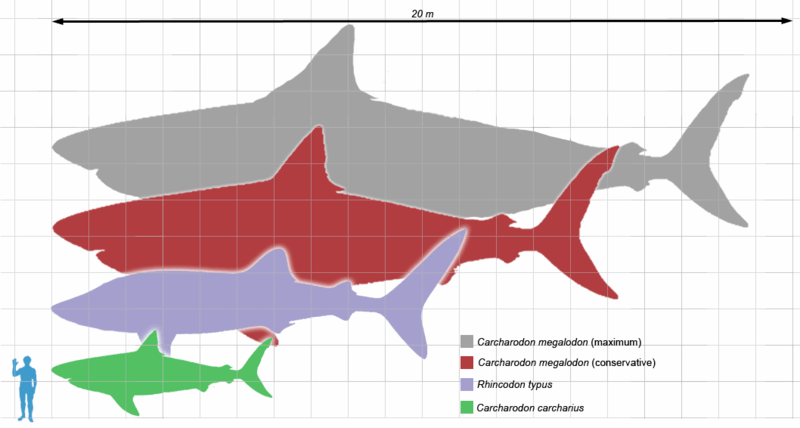
O. megalodon was not only the biggest shark in the world, but one of the largest fish ever to exist. Estimates suggest it grew to between 15 and 18 metres in length, three times longer than the largest recorded great white shark.
Without a complete megalodon skeleton, these figures are based on the size of the animal’s teeth, which can reach 18 centimetres long. In fact, the word megalodon simply means ‘large tooth’. These teeth can tell us a lot, such as what these massive animals ate.
In order to tackle prey as large as whales, megalodon had to be able to open its mouth wide. It is estimated that its jaw would span 2.7 by 3.4 metres wide, easily big enough to swallow two adult people side-by-side.
These jaws were lined with 276 teeth, and studies reconstructing the shark’s bite force suggest that it may have been one of the most powerful predators ever to have existed.
Almost all fossil remains of megalodon are teeth.
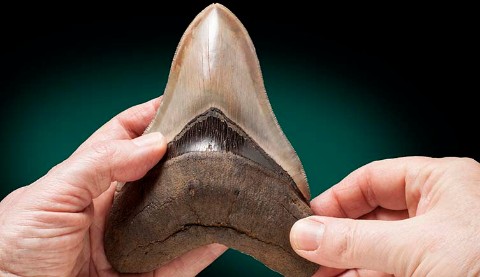
Sharks continually produce teeth throughout their entire lives. Depending on what they eat, sharks lose a set of teeth every one to two weeks, getting through up to 40,000 teeth in their lifetime. This means that shark teeth are continuously raining down onto the ocean floor, increasing the chance that they will get fossilised.
Teeth are also the hardest part of a shark’s skeleton. While our bones are coated in the mineral calcium phosphate, shark skeletons are made entirely from softer cartilage like our nose and ears.
 DuckDesk