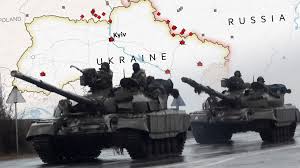
On 24 February 2022, Russia began a large military invasion of Ukraine, a country bordering southwestern Russia, marking a steep escalation of a conflict that began in 2014. Several officials and analysts called the invasion the largest conventional military attack in Europe since World War II.

After the Ukrainian Revolution of Dignity in 2014, Russia annexed Crimea, and Russian-backed separatist forces seized part of the Donbas, in south-eastern Ukraine, prompting an eight-year war in the region. Starting in early 2021, a Russian military buildup took place along the Russia–Ukraine border. The United States and others accused Russia of planning to invade Ukraine, and Russian officials repeatedly denied such a plan. During the crisis, Russian president Vladimir Putin described the enlargement of NATO after 1997 as a threat to his country’s security, a claim that NATO rejected, and he demanded that Ukraine be permanently barred from joining NATO. Putin expressed Russian irredentist views, and questioned Ukraine’s right to statehood. Before the invasion, attempting to provide casus belli, Putin accused Ukraine of committing genocide against its Russian-speakers; the accusation was widely described as unfounded.
On 21 February 2022, Putin recognised the Donetsk People’s Republic and Luhansk People’s Republic, two self-proclaimed states controlled by pro-Russian separatists in Donbas. The next day, the Russian Federation Council unanimously authorised use of military force, and Russian soldiers entered both territories. On 24 February, about 05:00 EET (UTC+2), Putin announced a “special military operation”, allegedly to demilitarise and “denazify” Ukraine. Minutes later, missiles struck places across Ukraine, including Kyiv, the national capital. The Ukranian Border Guard reported attacks on posts bordering Russia and Belarus.Shortly afterwards, Russian Ground Forces entered Ukraine, prompting Ukrainian president Volodymyr Zelenskyy to enact martial law and general mobilisation.

The invasion received widespread international condemnation, including new sanctions imposed on Russia, triggering a Russian financial crisis. According to the United Nations High Commissioner for Refugees, a refugee crisis across Europe was created, with more than one million Ukrainians fleeing the country during the first week of the invasion.Global protests took place; protests in Russia were met with mass arrests, and the Russian government significantly increased repression of independent media. Many companies boycotted Russia and Belarus. Various countries gave humanitarian and military aid to Ukraine. In response to military aid to Ukraine, Putin placed Russia’s nuclear forces on high alert, increasing tension between the West and Russia by invoking increased fears of nuclear war.
 DuckDesk
Reblogged this on BLOGSTOCK.
LikeLike