
I have tried and, tried so
hard.
But there’s nothing that
has come out.
how to say, I’m
done with hardest of
my limits but my heart
just doesn’t shout.
Tried a lot to write
about me, the people
around and the
universe.
But nothing was there I
could call mine.
How could I say, I have
lost my mind in my own
web of silly doubts.
What’s mine, what’s not,
That doesn’t matter
anymore.
But what hurts the most
is what I bowed as mine
is not mine anymore. As
the pen is calm enough
to let the pages go blank.
How could I say, I’ve just
dumped of my mind’s
door.
Plastics degradation by microbes: A sustainable approach
A b s t r a c t
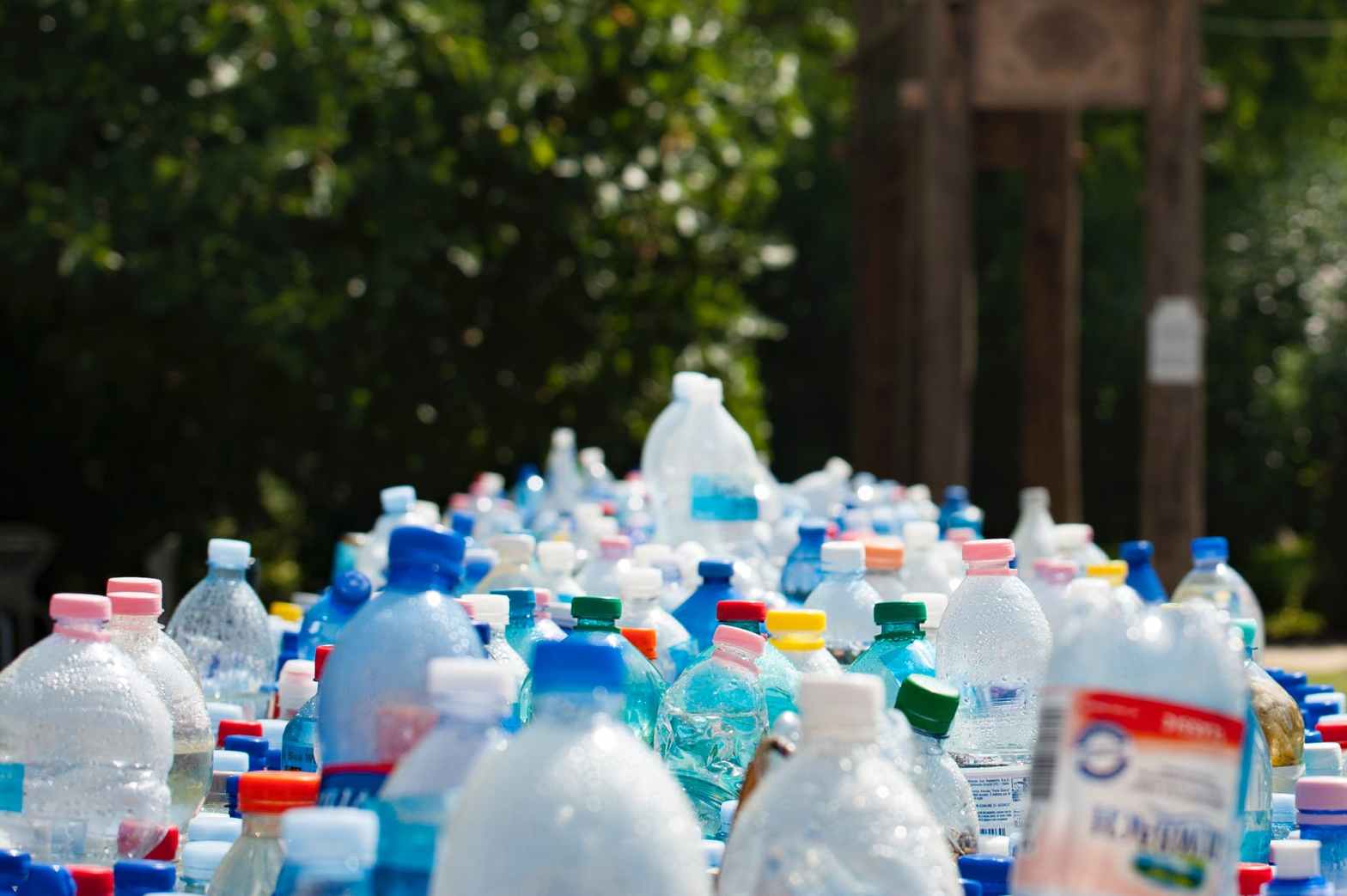
Plastics play an important part in every sector of economy all over the world due to their extensive use in agriculture, building and construction, health and consumer goods. They are the backbone of many industries because they are used in the manufacturing of different products including defense materials, sanitary wares, tiles, plastic bottles, artificial leather and different other household items. Plastics are also
used in packaging of food items, pharmaceuticals, detergents, and cosmetics. Excessive use of plastics poses a serious threat to the ecosystem and human life on the planet. Plastics accumulation on land and sea has aroused interest to degrade these polymers. There is a need to use adequate biodegradable methods in order to reduce plastics burden from the environment. In order to overcome plastics associated environmental problems, understanding of the interaction between microbes and polymers is of prime importance. Many living organisms but predominantly microorganisms have evolved strategies to survive and degrade plastics. The present review focuses on the types of plastics on the basis of thermal
and biodegradable nature, degradation and biodegradation types, types of degradable plastics, characterization of biodegradation, and factors affecting biodegradation. Plastic degradation and bioremediation potential make these microorganisms propitious for green chemistry to eliminate harmful plastics from the ecosystem.
C o n t e n t s
- Introduction
- Plastic classification on the basis of thermal properties
2.1. Thermo-plastics
2.2. Thermosetting polymers - Types of degradable plastic
3.1. Photodegradable bioplastics
3.2. Bio-based bioplastics
3.3. Compostable bioplastics
3.4. Biodegradable plastics - Types of degradation
4.1. Photo-oxidative degradation
4.2. Thermal degradation
4.3. Ozone degradation
4.4. Mechanochemical degradation - Biodegradation
5.1. Aerobic biodegradation (aerobic respiration)
5.2. Anaerobic biodegradation - Mechanism of biodegradation
- Analytical procedures for biodegradation
- Polymers degradation by microorganisms
8.1. Biodeterioration
8.2. Bio-fragmentation
8.3. Mineralization
8.4. Assimilation - Enzymatic degradation of plastics
9.1. Characterization of plastic biodegradation
9.2. Factors affecting biodegradation - Polyethylene degradation
- Biodegradable plastics types based on the mode of degradation pathway
11.1. Recommendations/suggestions - Conclusions
1. Introduction
From different hydrocarbons and petroleum derivatives high molecular weight organic polymers are obtained. These polymers are known as plastic . The word ‘‘plastic” derived from the Greek word ‘‘Plastikos”, that means which can
be molded into different shapes. Plastics stated as the polymers which start moving on heating so can be casted into moulds. Generally, plastic materials are derived from
petrochemicals except biodegradable bioplastic Plastic consists of chloride,
oxygen, hydrogen, carbon, silicon and nitrogen. Polyethylene consists of 64% of total plastic and its general formula is CnH2n.
For packaging and many other purposes like agricultural films formation, diaper packaging and fishing nets plastics are used. Plastics play an important part in every sector of economy all over the world. In highly growing areas i.e. agriculture, building and construction, health and consumer goods, plastics use ensures that they are in high demand and without plastics no one can do work.
Plastics, the backbone of many industries, are used in manufacturing of various products that are used in our daily life i.e. defense materials, sanitary wares, tiles, plastic bottles, artificial leather and different other household items. Plastics are also used in packaging of food items, pharmaceuticals, detergents and cosmetics.
One of the rapidly growing fields in global industry is the production of synthetic plastics. Plastics are more superior than other materials due to their unique properties. These properties have been led to increase the plastic production scale to 20 folds since 1964 , and production scale exceeds 300 million tons/year in 2015 it
reached to 335 million tons. There are advantages and disadvantages of plastics.
Plastics are strong, durable, and light weight. On the other hand, they are harmful to the natural environment, resistant to degradation and leading to environmental pollution. On our planet, plastics pose a serious threat by accumulating in large quantities.
Plastics can be differentiated into degradable and nondegradable polymers on the basis of their chemical properties. Plastics that are obtained from renewable resources are biodegradable plastics. These are naturally degradable, as a source of cellulose, starch and algal material, an important component in plants, animals and algae. These polymers are also produced by microorganisms. Non-degradable plastics, typically known as synthetic plastics, are derived from petrochemicals
and are higher in molecular weight due to the repetitions of small monomer units.
During plastic degradation the generation of plastic particles with a size of < 5 mm are known as microplastics (MPs) which lead to potential ecotoxicological effects. Fibrous MPs may be inhaled, may persist in the lung, and along with associated contaminants including dyes and plasticizers could lead to health effects like carcinogenicity and mutagenicity. Generally, it is accepted that plastic waste can permanently be eliminated through incineration. However, unburned material
still exists in the bottom ash in the form of a solid residue from incinerators that can produce 360 to 102,000 microplastic particles per metric ton after incineration. This bottom ash is a potential source of MPs released into the environment.
It is reported that plastic fragments in the <100 nm size range, referred to as nanoplastics (NPs), may also be formed in the aquatic environment and may cause potential health effects.
Suman et al. (2020) reported that the histopathology analysis indicated the deformation of epithelial cells in the midgut region after both chronic and acute exposures at 1 and 100 mg/L, respectively to polystyrene microplastics. In another study, Chen et al. (2020a; 2020b) reported that redclaw crayfish were exposed to different concentrations (0, 0.5, and 5 mg/ L) of 200 nm-sized polystyrene microspheres for 21 days and the microplastics were distributed in the intestines and hepatopancreas after ingestion and inhibited the growth of Cherax quadricarinatus.
Xiao et al. (2020) reported that freshwater microalgae, Euglena gracilis, exposed to 1 mg/L of polystyrene microplastics (PS-MPs) for 24 h. The vacuoles of microalgae were induced and pigment contents were reduced significantly (p < 0.05).
Plastics can be degraded in the environment by 4 mechanisms i.e. hydrolytic degradation, photodegradation, thermo-oxidative degradation and biodegradation. Plastics posed serious threats to our environment and their removal from the
environment is imperative. The plastics that are degraded by microorganisms are known as biodegradable plastics and microorganisms can degrade them into H2O and CO2. The rate of biodegradation of polymers can be increased by using thermo-oxidant and photo-degrading agents.
Free radicals cause rupturing of the chains by oxidizing thepolymeric molecules. Many physical and chemical changes occurdue to photo oxidation including reduction in polymers molecular weight and production of carbonyl groups. In thermal oxidation
high temperature more than melting point is given which decreases the fusion heat and increases level of carbonyl group production. As a result, polymers are more liable to be degraded by microorganisms. Phase separation, erosion, discoloration treatment types, cracking and types of polymers are the various factors that are responsible for the biodegradation and source of pollution in the environment.
As most of the reviews are on fates of plastics/microplastics including transportation, toxicity, and risk assessment to humans with reference to terrestrial and marine ecosystems. The present review describes plastic classification, plastic types, degradation types, biodegradation and mechanism of biodegradation. This review focuses on microbial degradation of plastic/microplastics which has received less attention as compared to the toxicity of plastic/microplastics in terrestrial and marine environments to eradicate plastic pollution from the ecosystem.
2. Plastic classification on the basis of thermal properties
On the basis of thermal properties plastics are divided into two classes, i.e. thermoplastics and thermosetting polymers. By the polymerization of small molecules, plastics can be synthesized.
2.1 . Thermo-plastics
It is a type of plastic that can be molded for several times but on heating it cannot undergo any chemical change in its composition. Examples of thermo-plastics are polypropylene (PP), polyethylene (PE), polyvinyl chloride (PVC), polystyrene (PS) and polytetrafluoroethylene (PTFE). These plastics are ranges from 20,000 to
500,000 amu (atomic mass unit) in molecular weight and are generally known as common plastics. Macromolecules are arranged in linear manner in the form of chain in which atoms and molecules are attached end to end in carbon chains. By opening of double bond that is required to form linear macromolecules and the reaction
is proceeded by free radical mechanism. This type of polymerization is known as addition polymerization and examples include are polypropylene and polyethylene.
2.2. Thermosetting polymers
Another type of plastic is the thermosetting plastic in which plastic once melt and casted into a certain shape, after solidification it cannot be melted and modified again. All chemical changes, irreversible, are not examples of thermosetting polymers. Polyurethanes and phenol–formaldehyde under favorable conditions are formed by step growth polymerization. At each step, H2O and HCl are released as a by products and allowing the condensation of bi-functional molecules inter molecularly. In thermosetting plastic, monomers convert themselves into an infusible
mass by undergo small chemical changes on heating.
3. Types of degradable plastic
Plastics that are easily degradable can be divided into four types: Photodegradable bioplastics, bio-based bioplastics, compostable bioplastics and biodegradable bioplastics.
3.1. Photodegradable bioplastics
In this type of plastic, the groups that are connected to the polymer backbone are light sensitive. By giving long time exposure of UV radiation, the polymeric structure can be disintegrated. When radiation supply stopped then degradation is not possible. Landfills lack sunlight so plastics in landfill are not degradable. Artificial photo-degradation can lead to the release of toxic volatile organic compounds (VOCs) which are potentially hazardous and associated with the environmental weathering of
plastic .
3.2. Bio-based bioplastics
Types of plastics in which 100% of carbon is obtained from renewable resources, like forestry and agricultural resources are known as bio-based plastics. Starch, corn, soybean and cellulose are the examples of these resources.
3.3. Compostable bioplastics
In composting process, requires a specific setting in order to break down whereas biodegradable products break down naturally, the plastics are decomposed biologically without leaving any toxic material (Meereboer et al., 2020). The rate of composting of this plastic is similar to the other compostable material. Plastic is designated as bio-compostable, by taking into account its total biodegradability, ecological toxicology and its disintegration degree by standardized testing.
3.4. Biodegradable plastics
Plastics that are degraded by action of microorganisms are known as biodegradable plastics. Biodegradable is a term that is used for the materials that are disintegrated into biogases and biomass by the action of microorganisms .
4. Types of degradation
4.1. Photo-oxidative degradation
The primary source of polymers damage is light. This process is started by light absorption and examples of this degradation process are photodegradation and photo-oxidation. Synthetic polymers are prone to be degraded by processes that
are initiated by ultraviolet (UV) radiations. The lifetime of polymeric material, used for various applications, is determined by UV radiations ranging from 290 to 400 nm and sunlight is the source of such radiations (Jensen and Kops, 1980). Photoirradiation
produces ester, aldehyde, propyl and format groups at the soft segments of polymers where degradation occurs. The C– C bonds are easily cleaved by UV radiations
4.2. Thermal degradation
Normally, thermal and photochemical degradation are considered as similar processes and both are classified as oxidative processes or oxidative degradation. The first difference is in the sequence of initial steps while the second difference is in the site of reaction. In thermal degradation, reactions occur on the whole part
of the polymer while in photochemical degradation reactions occur only on the polymer surface (Tyler, 2004). Thermal degradation takes place by accidental or depolymerization reaction. For its initiation, temperature and UV light are required .
Due to imperfections the bonds (peroxide /ether link) present in the chain become weak and depolymerization usually starts at such weak bonds. At high temperature, a large amount of polymers is depolymerized e.g. PE is decomposed at high temperature and produces small monomers. Polymethylmethacrylate (PMMA) can
also be converted quantitatively back to monomers.
4.3. Ozone degradation
Ozone normally present in the atmosphere causes polymeric degradation. Polymers are lasting for a longer time when oxidative processes are not active. Ozone in the atmosphere is present in very small amount but has a markedly great effect on polymers. Ozone degrades polymeric materials by the formation of reactive oxygen species (ROS). These ROS are formed by the reduction in molecular weight, by change in electrical and mechanical properties of polymers. When polymers are exposed to ozone then it results different types of carbonyl and unsaturated carbonyl products are formed. These products are based on ketones, lactones, esters
and aromatic carbonyl. These all are further associated with another phase known as styrene phase. Chains in polymer that contain C–C bonds and others saturated hydrocarbon links, aromatic ring ozone reactions occur. During these reactions,
intermediates (bipolar ions/peroxy radicals) are formed that are unstable and cause the degradation of large molecules or polymers.
4.4. Mechanochemical degradation
It involves polymer chains breakdown under the mechanical stress and ultrasonic irradiations. Due to chain-side radical reaction, branches in long chains are increased in numbers. The width of weight distribution function of molecules is decreased (correlation between crosslinks and ruptures), double bond concentration is also changed. Nitroxide molecules work as chain terminating agents in mechanochemical degradation of polymethylmethacrylate (PMMA) and produces radicals that are known as macro radicals. These radicals are used in polymerization reaction (which is free
radical polymerization reaction). In air, the molecular weight of polyvinyl chloride is reduced by mechanochemical dichlorination with different oxide powders
e.g., SiO2, CaO, Al2O3 and Fe2O3.
5. Biodegradation
In a material, any physical and chemical change that is caused by the action of microorganisms is known as biodegradation. Natural and synthetic plastics are degraded by the action of microorganisms including bacteria, actinomycetes, and fungi.
5.1. Aerobic biodegradation (aerobic respiration)
In this type of degradation, microorganisms break down large organic compounds into smaller compounds by using oxygen as an electron acceptor (Fig. 1). By-products of this process are carbon dioxide and water.
Carbon plastic + Oxygen => carbon dioxide + water + Carbon residual
5.2. Anaerobic biodegradation
In anaerobic biodegradation, oxygen is not necessary for the breakdown of compounds by the action of microorganisms. Oxygen is an important component for the natural attenuation of contaminants at sites of hazardous waste. Anaerobic bacteria use nitrate, iron, sulphate, manganese and CO2 as an electron acceptor
in place of oxygen to break down large organic compounds into smaller compounds.
Carbon (plastic) => methane + carbon dioxide + water + Carbon residual
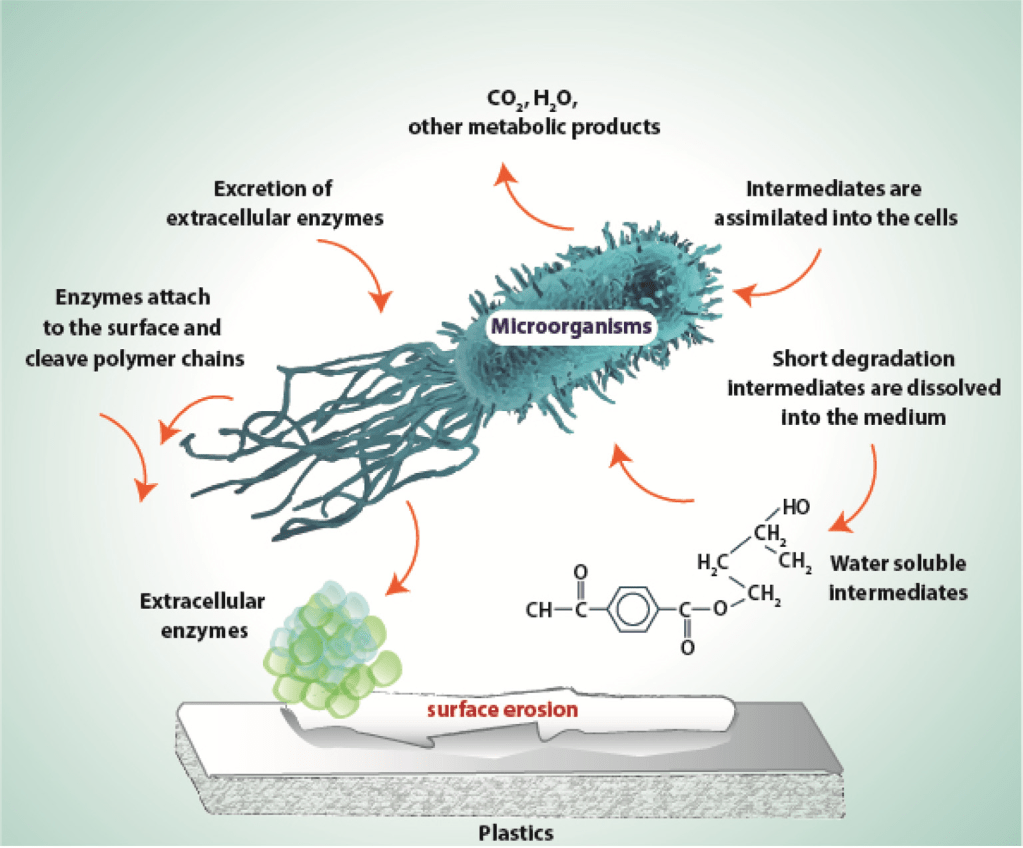
All polymers are not directly transported into the cells of microorganisms through their cell walls because they are large in their size and are not water soluble. Microorganisms can use these polymers as a source of energy by secreting extracellular enzymes. Polymers are depolymerized by these enzymes outside the bacterial cells. Enzymes play their role in polymers biodegradation both
by intra-cellularly and extra-cellularly. Depolymerization and mineralization
are the two processes that are involved in biological degradation of plastic polymers.
Exoenzymes, extra-cellularly secreted enzymes, break down the large polymers and produce small molecules that are small enough and water soluble. These molecules can pass semipermeable bacterial membrane and utilized as source of energy. The process in which large polymers are broken down is known as depolymerization
while the process in which the end products are inorganic species like H2O, CH4, CO2 is known as mineralization. In case of aerobic environment, only production of H2O, CO2, and microbial mass as an end products was recorded, whereas under anaerobic/methanogenic and sulfidogenic conditions, in addition to these three key components, CH4 and H2S were recorded as the extra end products (Fig. S1) of the polythene.
6. Mechanism of biodegradation
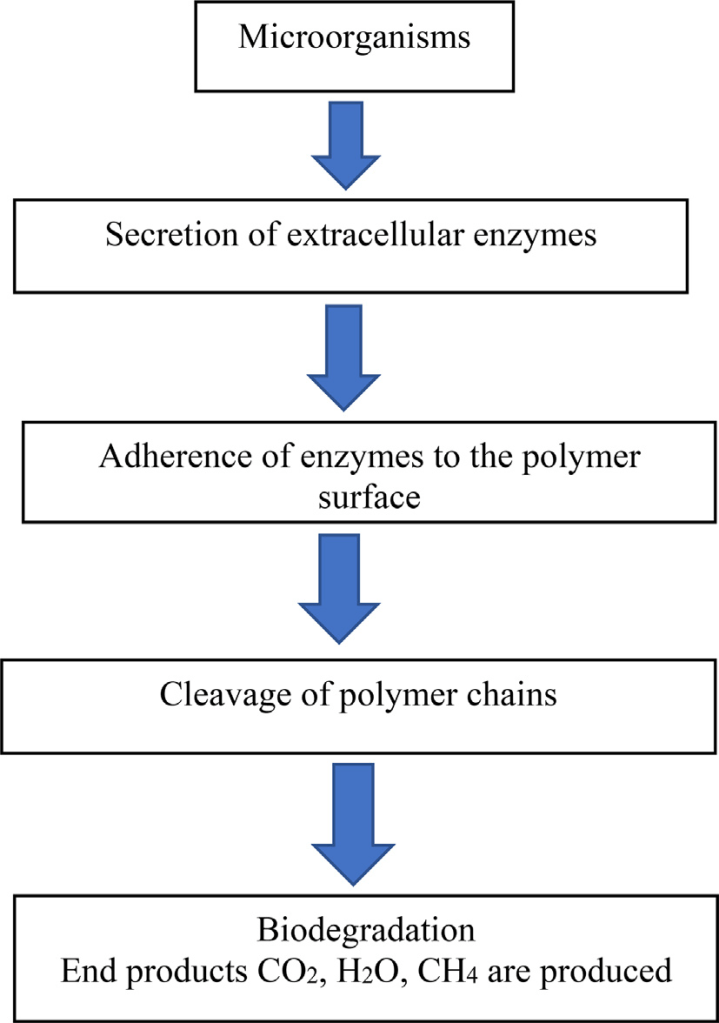
Biodegradation of polymers consists of three steps;
- microorganism attachment on the surface of polymer
- utilization of polymer as a source of carbon
- polymer degradation. Microorganisms attach to the surface of polymers and degrade these polymers by secreting enzymes in order to obtain energy for their growth monomers and oligomers that are low molecular weight molecules. Some oligomers may be assimilated in the internal environment of microorganisms after diffusing inside them (Fig. 2).
7. Analytical procedures for biodegradation
A wide variety of methods is currently available for measuring the biodegradability of polymeric materials . Several test methods to assess the potential biodegradability of plastics have been developed by International Standard Organization (ISO) and American Society for Testing and Materials (ASTM) including gas chromatography/-
mass spectrometry (GC–MS), stereomicroscopy and micro-Fourier transform infrared spectroscopy (m-FTIR). Biodegradation can be characterized with loss of weight, change in tensile strength, change in dimensions, change in chemical and physical properties, carbon dioxide production, bacterial activity in soil and change in molecular weight distribution
8. Polymers degradation by microorganisms
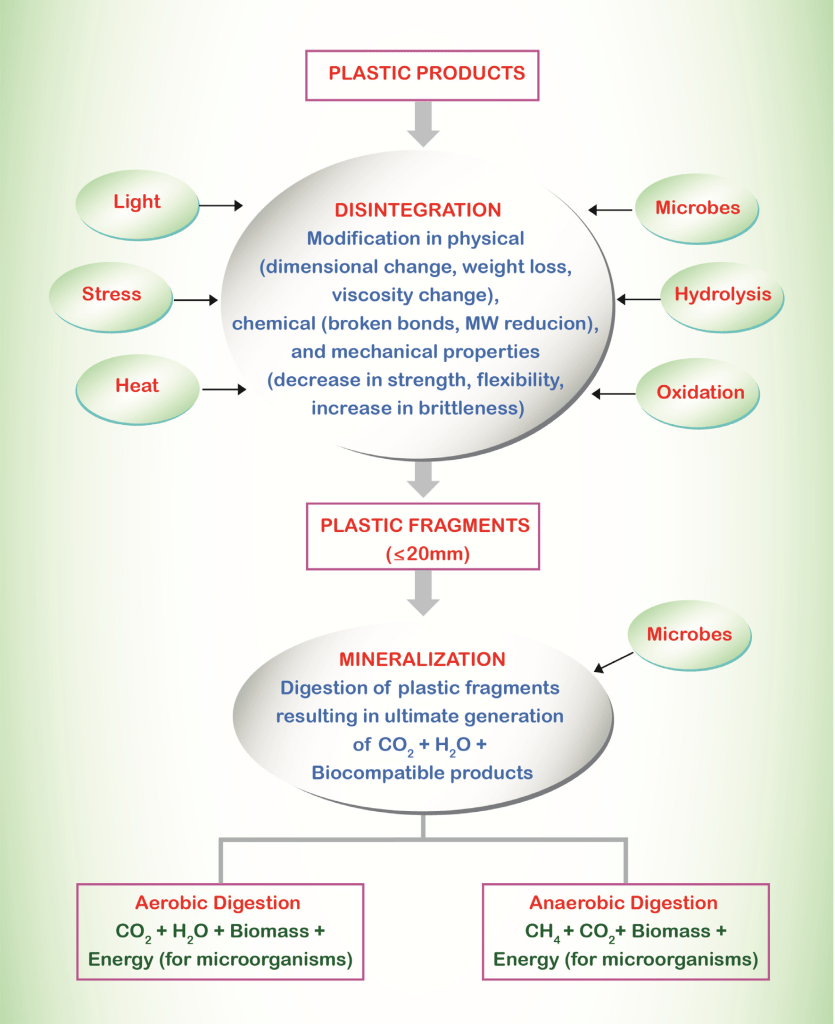
Microbial polymers degradation includes biodeterioration, biofragmentation, mineralization, and assimilation.
8.1. Biodeterioration
It is the process that affects the surface of plastics and changes their chemical, physical and mechanical properties. All chemical and structural changes depend upon the structure and composition of polymers. Environmental conditions also influence change inpolymers properties. Substrate formation inside the plastic andbiofilm formation both are due to the process of deterioration
8.2. Bio-fragmentation
After biodeterioration, the next step is bio-fragmentation that involves the enzymatic action on plastic polymers. Oxygenases, mostly contained enzymes in bacteria, have the ability to break oxygen molecules are added in the carbon chains and as a result,
alcohol and peroxyl products are formed that are less harmful. Furthermore, the transformation process of carboxylic groups is catalyzed by lipases and esterases or by endopeptidases for amide groups.
8.3. Mineralization
Plastic polymers that are formed in the bio-fragmentation process enter in the microbial cells through cell membranes. Monomers that are large in size cannot enter inside the cells and stay outside. The small monomers that moved inside the cells are oxidized and used for the energy production. This energy eventually is utilized for biomass production
8.4. Assimilation
In the assimilation process, atoms are integrated in the microbial cells for complete degradation. Secondary metabolites are transported outside the cells or transfer to other microbes that further perform degradation and use these metabolites (Fig. 3). The oxidized products i.e. CO2, N2, H2O and CH4 are released during metabolites degradation.
9.Enzymatic degradation of plastics
Due to the absence of hydrolysable groups in the carbon–carbon backbone, the degradation of plastic by microbial enzymes is a very difficult task. The reduction of molecular weight is the first step that is achieved by the action of both biotic and abiotic factors. By UV light exposure, the carbonyl group of polymer is easily
attacked by microbial enzymes. For polymers degradation different enzymes are used e.g. laccase, manganese-dependent enzymes (lignin degrading enzymes), urease, lipase, and protease. Thermostable laccase can degrade the polyethylene (PE) in 48 h of incubation at 37 degree C (Jaiswal et al., 2019).
9.1. Characterization of plastic biodegradation
All polymers are not dissolved in water but water soluble polymers are easily degraded and converted into alcohols, ketones, and acids. There are some points by which plastics biodegradation can be monitored.
- Plastic surface properties are changed
- Physical and mechanical properties of the plastic are changed
- Products are analyzed on the basis of chemical composition
- Oxygen consumption rate
- Carbon dioxide evolution rate
- Production of biomass which shows the microorganisms utilizes the plastics as the carbon source for their growth.
9.2. Factors affecting biodegradation
Plastic biodegradability can be determined by following physical and chemical properties. There are following factors that affect plastic degradation by microbes.
- Functional groups availability by which hydrophobicity is increased
- Complexity in structure i.e. linear/branched
- Bond type bonds are easily breakable like amide bonds and ester bonds. Coupling in chain (ester > ether > amide > urethane)
- Composition on the base of molecules
- Form of polymer its nature and physical appearance example pellet, films, powder
- Polymer density and its molecular weight
- TM morphology: amount of region amorphous region and crystalline region
- Toughness polymers which are soft degrade faster than those that are hard or tough ones.
Degradation ability of microorganisms is reduced when solubility of polymers is decreased. Plastics are less vulnerable to microbial attack by decreasing their solubility. They are adapted to microbes through their cell membrane Amorphous nature of polymers is more vulnerable to microbial enzymes attack than the crystalline nature. So, increase in crystallinity decreases polymer degradation. In a hydrophobic environment, plastics can restrict microbial activity by inhibiting the process of water absorption.
10. Polyethylene degradation
Plastic is the most used material for food wrapping and is basically made of PE material . Shopping bags are PE bags. These bags are composed of PE and 10% of the municipal waste, all over the world, is due to the excessive use of plastic
material which is mainly PE . Usage of PE bags all around the globe is about 500 billion to one trillion annually.
The plastic accumulation in the terrestrial environment or in the sea coast is about 25 million tons every year. PE is chemically inert and hydrophobic in nature and microorganisms have no appropriate mechanism to digest these synthetic plastics . PE polymers are used by microorganisms as a substrate for their growth. Erosion, discoloration, cracking and phase separation are the indicators of PE degradation. PE degradation is further classified into two classes: abiotic and biotic. In abiotic degradation all natural factors like temperature, ultraviolet rays cause degradation of PE while in case of biotic
degradation microorganisms are involved that consume the plastics by changing their properties. As PE is safe, cheap, harmless and stable in the environment, and is easy to proceed, it is one of the polymers that are mostly seen all over the world. The two possible ways by which PE usefulness is maintained in nature are to use microbes in order to degrade polymers or PE. The second is to make polymers artificially that are prone to degradation by microorganisms.
Polyolefins, low density PE, are unreactive in their chemical nature.
For a shorter period 95 degree C is used while for a longer time it may be used at 80 degree C . Due to incomplete crystallinity that ranges in 50–60%, there are several properties of low-density polyethylene (LDPE) such as rigidity, tensile strength, flexibility and tear strength . The carbonyl group, generated in polyethylene oxidation, is used by microorganisms for its
degradation .
The oxidative degradation mechanism, used for non hydrolysable polymers e.g. polyethylene and polypropylene, leads to loss in molecular weight of polymers. Several oxidative enzymes are involved in oxidation of ethylenic groups; these enzymes are monooxygenase, peroxidase, manganese, peroxidase, dehydrogenase and oxidase. By the action of extracellular and intracellular
enzymes, polymers convert into oligomers and monomers that are utilized by microorganisms for a source of energy. b-oxidation of fatty acids that occurs in animals and humans shows similarities with b-oxidation of polyethylene.
Microorganisms that are capable of degrading polymers have
been investigated and isolated from the natural environment. Polymer materials that are used for microbial degradation e.g., polyethylene and polypropylene. Polymer degrading microbial species that are associated with degradation
were identified as Streptococcus, Klebsiella, Micrococcus Staphylococcus, Pseudomonas (Das and Kumar, 2015). Biodegradability of polyethylene is enhanced by blending polyethylene with different additives, by adding these additives auto-oxidation of polyethylene enhances, by which molecular weight of polymer reduces and microorganisms then easily degrade these low molecular weight polymers (Fig. 4).
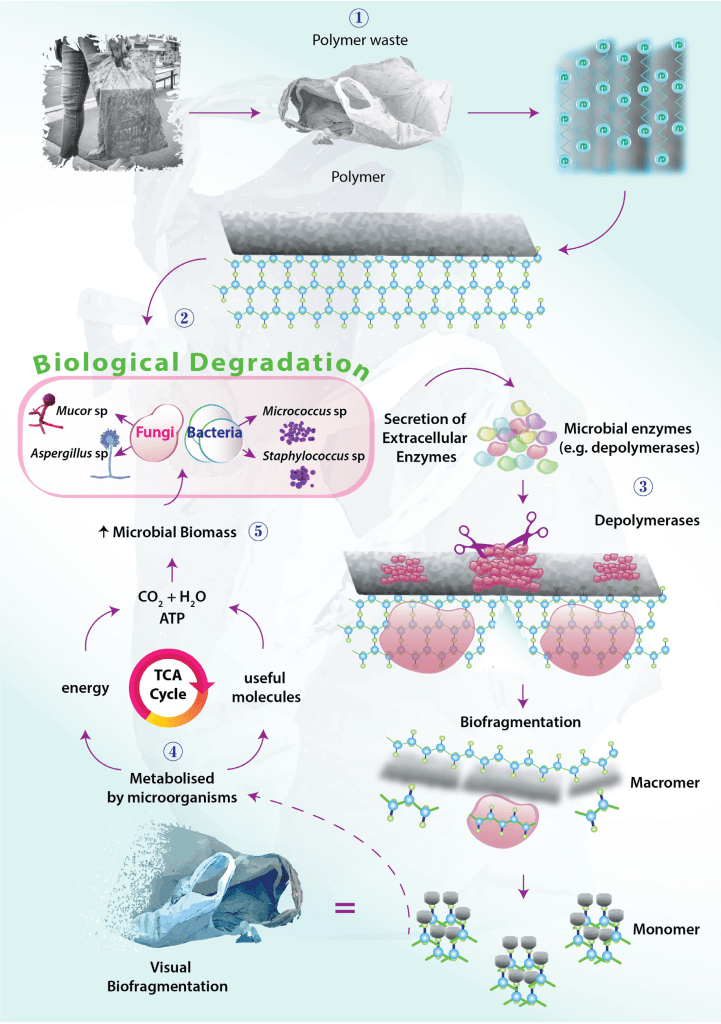
Shopping bags are made up of polymers of ethylene i.e., PE. (2) Certain microorganisms such as bacteria (e.g., Micrococcus sp., Staphylococcus sp.) and fungi (e.g., Mucor sp., Rhizopus sp.), produce extracellular PE degrading enzymes. (3) Depolymerases are one type of the polyethylene degrading enzymes, that can split the PE chain into macromere fragments (i.e., oligomers, dimers)
which subsequently get converted into monomers i.e., ethylene. (4) Microorganisms could metabolize theses monomers (ethylene) through aerobic or anaerobic pathways and utilize them as a carbon and energy source. (5) Microorganisms utilize this energy to reproduce which results in an increase in microbial biomass.
11. Biodegradable plastics types based on the mode of degradation pathway
The degradable plastics are further classified into two types based on the mode of degradation pathway. (a) Oxobiodegradable plastics and (b) Hydro biodegradable plastics. The hydrobiodegradable plastics are those that are degraded through hydrolytic mechanisms. The examples of these
plastics are cellulose, most general polyesters like polyhydroxyalkanoate
(PHA), and starch. Oxo-degradation consists of two stages: the abiotic oxidation and biotic degradation (Fig. S2). In the first stage, the carbon backbone of polyolefins is oxidized abiotically into small fragments. This oxidative degradation is accelerated by thermal degradation and UV radiations but the degradation rate of the entire process is not determined exactly. In the second
stage, degradation of polyolefin is taken by microbes.
The PE polymer is changed due to addition of a carbonyl group in the polymer backbone and this change is achieved by abiotic photooxidation. Polyethylene molecule carrying carbonyl group is transformed to an alcohol in the presence of monooxygenase. The alcohol is oxidized to an aldehyde through alcohol dehydrogenase. Subsequently, aldehyde is converted into fatty acid by the action of aldehyde dehydrogenase. Finally, the fatty acid is metabolized
through b-oxidation pathway
11.1. Recommendations/suggestions
As plastics, due to their massive use and release outside directly, are now reaching alarming concentration levels in our environment. Various physicochemical approaches i.e. photooxidative, thermal, Ozone, mechanochemical and catalytic are used, although such methods are costly and are not suitable to use at low plastic concentration, to exterminate plastics from the environment to save living organisms. For plastics degradation, microbial use is now considered as an eco-friendly method as compared to the conventional methods. Some suggestions are given below to consider during microbial use against plastic degradation.
- To degrade plastic potential of microbes including bacteria, fungi, and algae should be investigated.
- To maintain optimum conditions of microbes for efficient plastic extermination.
- Use of appropriate consortium of aerobic and anaerobic bacteria for more efficient plastic degradation.
- Successive use of microbes (bacteria, fungi, and algae) can also be effective for plastic degradation
- Use of microbial enzymes e.g. laccase, lignin degrading enzymes, urease, lipase, and protease can also be exploited to degrade plastic under aerobic and anaerobic conditions.
12. Conclusions
Plastics are petroleum-derived polymers and are used for various purposes. PE bags are used all over the world at large levels. The availability of micro- and nanoplastics in aquatic environment has been increased many folds due to biodegradation, thermooxidative degradation, photodegradation, thermal and hydrolysis processes in the ecosystem and poses serious threat to the aquatic
life (fresh and marine) and human life through food web. There is a need to use adequate biodegradable methods to eradicate these polymers from the ecosystem. Due to the hydrophobic and inert nature, it is difficult to remove or degrade polymers. Besides physical and chemical methods, microbes have shown promising potential to degrade these polymers.
The potential use of microbes for polymers removal needs to be further evaluated using original polymers contaminated wastewater. The removal of microplastics/nanoplastics, their toxicity and the utilization of microbes remain to be addressed. The transfer of plastic polymers from the waste into the aquatic ecosystem including rivers and oceans through different processes and the strategy to shift these polymers from the wastewater to a suitable place for deposition/incineration should properly be advocated. Long-term coordinated cleanup operations are needed to evaluate the progressive ecosystem effects.
……… Untitled……….

I will burry my feelings
inside
the core of my heart.
and it will be called a break
up.
May it will make us
restless but promise not to be
apart.
I will dumb the memories
down.
Although, my heart is
burning and the same ache
again.
And we’ll call “love is not
weedless”.
Alas, I’m asked to detach
from the glimpses of my
loved ones, whom I called
mine.
It’s ok, but its not fine at all.
Love killed me by making
me drown in it.
Then why would the world
won’t call it a crime?
_You Came And Went Away_

You came and went away
far enough.
And my heart felt cold being
helpless.
I don’t even dare to ask
“why? “.
All it felt like I was fooling
myself by falling in love
with someone who don’t
wanna hold upon.
The day before everything
was over between us.
we regarded our love as
forever.
yet you proved this wrong
enough.
I was happy and shy.
But now, let me be bold
I’m still in a state convincing
that, I’m strong.
……………….Untitled…

I see myself dying by
love-drought under the
season of rain.
My heart is cold enough to
express it’s feelings that are
not vain.
All i can say, I won’t get you
back.
Then why, I’m still chasing
the one who doesn’t even
care for?
Is my love a mere
waste and lame?
I found myself awake in the
middle of the night, with the
old familiar rain in my eyes.
How could I say, it’s not
haunting me inside.
yes, I cannot love again.
Cause I cannot leave my
love behind.
 DuckDesk